

Planning a new home, renovation, or extension in South Africa? One of your first big decisions will likely be: “Do I really need an architect, or will a draftsman do the trick?” It’s a perfectly valid question. Both professionals play a vital role in bringing building plans to life, but their training, services, and the depth of design insight they offer can differ significantly.
An architect is a highly skilled, university-trained, and professionally registered designer, overseeing both the creative vision and the technical execution of a building. In South Africa, the title “Architect” is legally protected. Only individuals registered with SACAP (South African Council for the Architectural Profession) – having completed a five-year degree, practical training, and rigorous board exams – may use it.
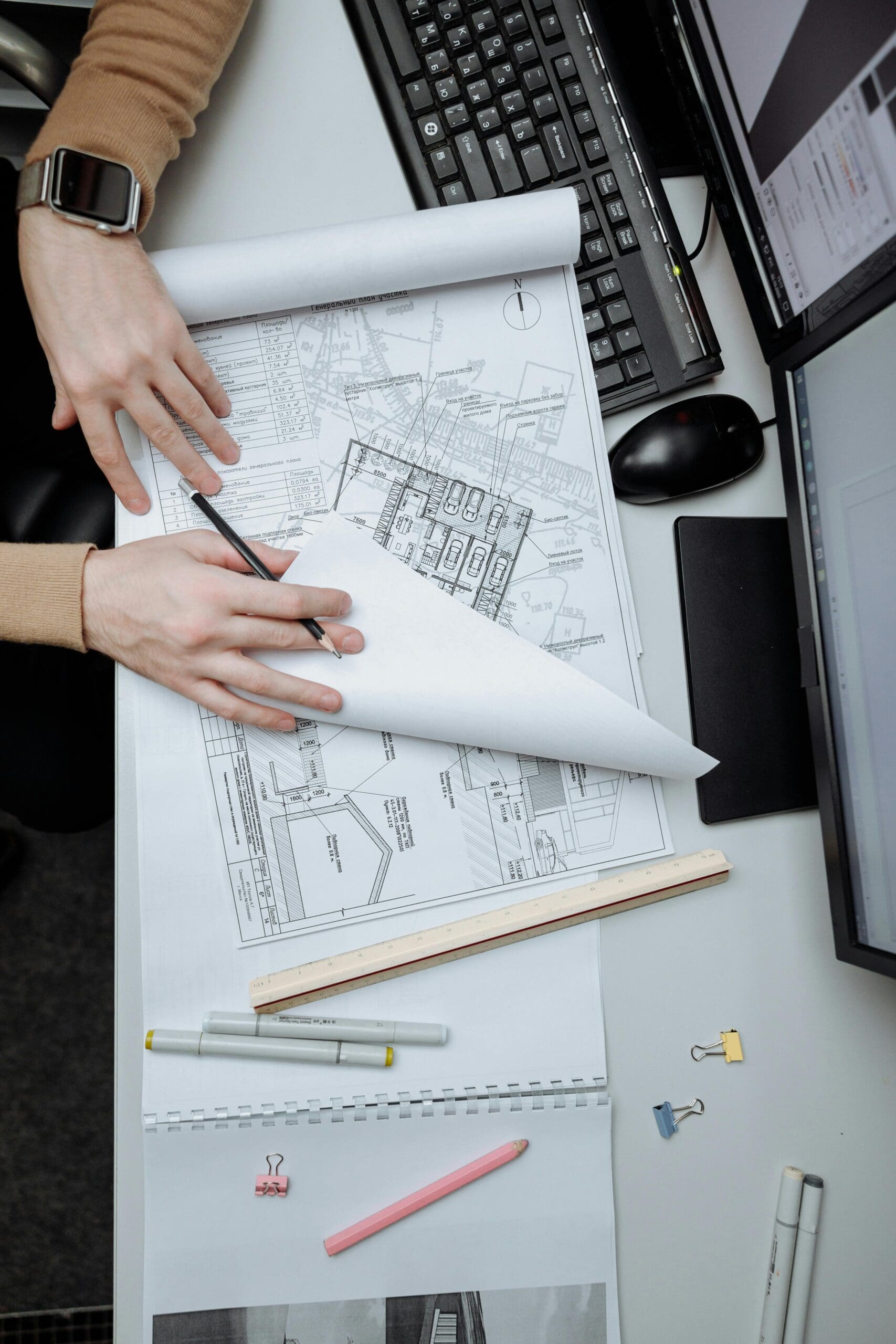
An architect’s role goes far beyond merely “drawing plans.” They are comprehensive project orchestrators, typically responsible for:
Holistic Design: Crafting the spatial experience, aesthetics, and functionality of your building, considering every detail from flow to finish.
Site Optimisation: Responding intelligently to environmental factors like sun path, prevailing winds, site slope, and breathtaking views to maximise comfort and efficiency.
Regulatory Navigation: Guiding you through complex zoning schemes, national building regulations, and municipal approval processes.
Consultant Coordination: Acting as the central point of contact, coordinating specialists like structural engineers, land surveyors, and other consultants.
Material & Sustainability Expertise: Advising on material selections, sustainable building practices, and cost planning to achieve your budget and environmental goals.
Construction Oversight: Monitoring the building process to ensure quality, compliance with plans, and adherence to design intent.
Essentially, an architect embraces the “bigger picture,” integrating form, function, and context to deliver a timeless, efficient, and inspiring design that serves you now and well into the future.
The Draftsman (and Technologist): Technical Experts
A draftsman (or draughtsperson) is trained in producing the technical drawings essential for building submissions and construction. Many possess extensive experience and strong drafting skills, with some also offering valuable design input – particularly those registered as architectural technologists or senior technologists.
SACAP in South Africa recognises various categories of registration, each with specific legal limitations on the scale and complexity of projects they can undertake:
Professional Architect
Senior Architectural Technologist
Architectural Technologist
Draughtsperson
While draftsmen and technologists are highly proficient in generating precise plans, their training and responsibilities are generally more focused on technical documentation and less on comprehensive design leadership or strategic project management compared to a Professional Architect.
Architect or Draftsman: Making the Right Choice for Your Project
When weighing your options, consider the nature of your build, its complexity, and the level of design expertise and service you truly need. Every project is unique.
- Scope & Scale of the Project
The overall size and type of development are crucial factors:
New Custom Home: For a bespoke residential property, especially on a challenging or scenic site, an architect’s ability to innovate with light, views, and spatial planning can be invaluable.
Commercial or Public Buildings: Projects like schools, offices, or wineries often demand multi-disciplinary coordination, intricate legal compliance, and stakeholder engagement – areas where an architect’s training and leadership are critical.
Simple Alterations: A straightforward carport, garage addition, or minor internal layout change might be perfectly handled by an experienced draftsman or technologist without the need for complex design input.
- Budget Considerations
Professional fees naturally vary with the level of service and expertise. Architects typically have higher fees than draftsmen, but it’s essential to evaluate long-term value against upfront cost. A thoughtfully designed home by an architect can:
Significantly increase resale value.
Minimise future maintenance issues.
Reduce long-term energy costs through smarter, sustainable design.
However, if your budget is very tight and your design requirements are basic, a registered technologist or draftsman can certainly be a cost-effective and perfectly suitable option for obtaining council-approved plans.
- Complexity & Design Ambition
Not all projects present the same technical or regulatory hurdles:
Challenging Sites: Is your plot steep, irregular, or subject to specific environmental factors? Architects are expertly trained to resolve complex spatial problems and seamlessly integrate structures into their surroundings.
Regulatory Minefield: Are there heritage restrictions, intricate zoning bylaws, or environmental impact assessments involved? Architects generally possess more experience navigating municipal bureaucracy and layered compliance requirements.
Unconventional or High-Design Projects: If your vision is unique, highly detailed, or driven by a strong design aesthetic, an architect’s creative input and holistic approach will be your greatest asset.
In essence, the more variables your project involves – be it ambitious design goals, difficult site conditions, or complex legal parameters – the more value an architect can offer in laying the right foundation from the start.
Here’s a simplified guide:
Choose an Architect if:
Your project is significant, complex, or high-value (e.g., a custom luxury home, a commercial development, or a public building).
You desire a tailored, innovative design that maximises your site’s potential and your lifestyle.
You need expert guidance through tricky regulations, heritage considerations, or sustainability goals.
You require comprehensive assistance managing consultants and the construction process.
A Draftsman or Technologist May Be Suitable if:
You’re planning a straightforward extension, minor renovation, or simple new build.
Your design brief is clear, relatively simple, and well-defined.
You’re working with a tight budget and primarily need council-compliant plans.
A Word of Caution: We’ve seen many instances where seemingly simple plans, lacking proper design foresight, led to costly issues down the line – from inefficient layouts to expensive compliance problems. Just because a drawing looks correct on paper doesn’t guarantee it will function well in reality.
Why This Decision Matters, Especially in South Africa
In South Africa, all building plans must be submitted to the local municipality and signed off by a professional registered with SACAP. If your chosen designer isn’t properly registered for the scope of your project, your application will be rejected. Building without approved plans can lead to severe penalties, including fines, legal action, or even forced demolition.
Beyond compliance, a well-conceived design significantly contributes to the long-term value and efficiency of your home. It can create more usable space, lower running costs through energy-efficient design, and dramatically improve your property’s resale appeal.
Final Thoughts
There’s no universal “right” answer. Both architects and draftsmen play invaluable roles in our built environment. The key is to match the appropriate level of service and expertise to your specific project needs.
If you’re unsure which professional is right for you, we’re always happy to have an honest, no-obligation chat. We’ll assess your goals, budget, and the complexity of your build to guide you towards the best path forward. Sometimes, a draftsman is perfectly sufficient. Other times, the investment in an architect’s expertise pays dividends many times over.
Ready to discuss your project? Let’s talk about your vision and figure out the ideal approach – whether that’s full architectural design or a more streamlined service.